Jacob's iPod Touch
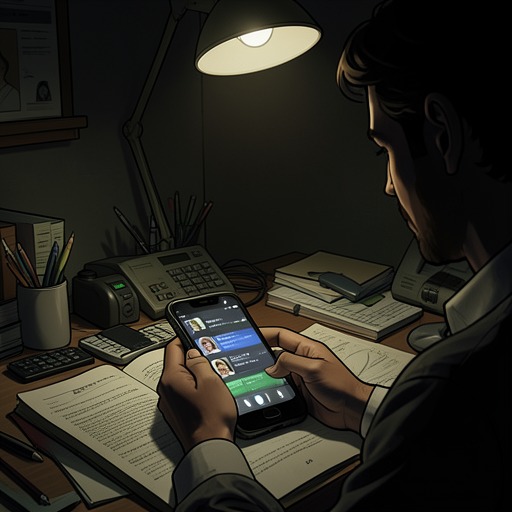
Defending JacobJacob's iPod Touch becomes the instrument of Andrew's discovery of Jacob's online activity and, in turn, an object Andrew believes may endanger his son. Its password-protected browser leads Andrew to the Cutting Room, where Jacob's screen name is attached to a saved story resembling Ben Rifkin's murder. Andrew worries both about what the device might preserve for the prosecution and about the access to the Internet that he cannot monitor; he takes it to his basement worktable and smashes it with a hammer.
A private gateway
Andrew has tried to monitor Jacob's Internet use on the family computer, installing a program to track what Jacob does and where he goes online. Derek tells him that Jacob uses the iPod Touch to read stories on the Cutting Room, a site where users post writing for others to read. The revelation unsettles Andrew's assumption that his monitoring covers Jacob's activity: the device provides another route, outside the computer he has been checking.
At Jacob's room, Andrew finds the iPod on the bureau. Jacob had given his parents its four-digit password as a condition of being allowed to keep it, so Andrew can open the browser. The saved bookmarks—Facebook, Gmail, and a few technology, video-game, and music blogs—do not include the Cutting Room. Andrew has to search for the site himself, and the discrepancy between the obvious bookmarks and the activity Derek described makes the device a concealed gateway rather than a transparent extension of family computer use.
The account called Job
The Cutting Room is a plain-text message board. Its stories range from sexual fantasies involving violence to accounts of torture without a sexual element; the site has no images or video. The limited browser on the iPod does not let Andrew establish which stories Jacob read or how long he spent there. It does establish that Jacob has an account: the screen name Job appears at the top of the page.
Andrew opens Job's profile and finds a list of twelve favorite stories. At its top is A Walk in the Woods, dated April 19, more than three months earlier. The author and uploader fields are blank, so the page does not establish whether Jacob wrote the story, uploaded it, or merely saved it as a favorite. Its invented names and setting, however, do not conceal its close correspondence to the killing: a boy takes a knife into the woods, and the story recasts Cold Spring Park as Rock River Park, Newton as Brooktown, and Ben Rifkin as a bullying character named Brent Mallis.
Evidence, interpretation, and fear
The iPod offers a trace of Jacob's online life but not a complete account of it. Andrew cannot determine whether Jacob authored the story or only read it, and he acknowledges to himself that even authorship would not prove that Jacob committed murder. He tries to frame the story as an immature, tasteless act under the pressure of Jacob's confinement and approaching trial. Still, the story's resemblance to the murder unsettles the distinction Andrew wants to maintain between a disturbing piece of writing and evidence about his son.
That tension reaches beyond the story itself. Andrew remembers Jacob's earlier cry, “Stop, you’re hurting me,” and describes his response as an internal wound. He continues to believe in and love Jacob, while recognizing that his emotional reaction has changed: a father's fear and hurt coexist with the lawyer's insistence that the story proves nothing. The device therefore mediates not just access to a website but the gap between what Andrew can establish and what he cannot stop imagining.
Destruction and significance
After reading A Walk in the Woods again, Andrew clears it from the browser's memory and returns the iPod to Jacob's bureau. He considers saying nothing to Jacob or Laurie, but worries that deleting the page will not erase the digital record. From his experience with the Internet and police work, he knows that activity may persist on servers and computer hard drives. He also sees the iPod as a continuing danger because Jacob can use it to reach the Internet beyond Andrew's supervision.
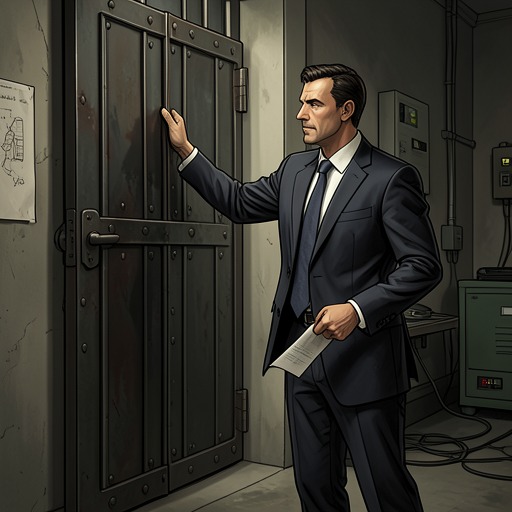
Andrew brings the device downstairs, lays it glass-side up on his worktable, gets a hammer, and smashes it. The act closes the route through which he has learned about Job and the saved story, but it does not resolve what the story means or erase the possibility of records elsewhere. An object that had seemed like an ordinary, privately used device becomes conspicuous as a potential source of evidence and a threat to Andrew's control. Its destruction is at once protective and compromising: Andrew acts to shield Jacob from exposure while responding to a discovery that has made his confidence in his son's innocence more difficult to inhabit.